
Organic Coconut Sugar Exporter from Indonesia: Product Profile and Market Demand

Organic coconut sugar is a plant-based sweetener used in modern food supply chains. Buyers choose it because it supports natural ingredient positioning and diverse food applications. Importers, manufacturers, and ingredient traders use it in bulk sourcing for food production and retail markets.
Organic coconut sugar plays a defined role in global ingredient sourcing. Moreover, food producers look for plant-derived sweeteners that support simple product positioning. Manufacturers produce coconut sugar through controlled heating and crystallization of coconut blossom sap. As a result, the sugar retains its brown colour and mild caramel taste. Therefore, these characteristics support its use across various food formulations.
Furthermore, global buyers classify coconut sugar as a specialty sweetener rather than a direct substitute for refined sugar. It behaves differently in texture, colour, and moisture response. Consequently, manufacturers adjust formulations when using it in bakery, beverage powders, and snack products. In addition, ingredient suppliers distribute it in bulk to factories that require plant-based sweeteners.
Meanwhile, demand continues to grow in markets that prioritize plant-based and minimally processed ingredients. Therefore, importers often plan scheduled shipments and long-term supply agreements. Before purchasing, buyers review specifications, packaging systems, and export readiness. Overall, understanding product profile and market demand supports more informed and lower-risk sourcing decisions.
What Is Organic Coconut Sugar
Organic coconut sugar is a plant-based sweetener made from coconut blossom sap. Food manufacturers use it for natural ingredient positioning and diverse formulations. Importers and ingredient suppliers source it in bulk for food production and retail uses.
First, farmers collect fresh sap from coconut blossoms using controlled tapping methods. Then, processors heat the sap under managed temperatures until it thickens. Next, they evaporate moisture and form brown sugar crystals through crystallization. Finally, producers dry, cool, and sieve the crystals before packing.
Moreover, the raw material comes from coconut trees grown in tropical agricultural systems. Indonesia and similar regions support continuous sap harvesting under stable climates. Therefore, farmer groups and processors coordinate sourcing and processing schedules. This structure helps suppliers maintain steady raw material flow for exporters.
In addition, producers avoid refining steps typical in white sugar manufacturing. Instead, they focus on evaporation, crystallization, and drying stages. As a result, the sugar keeps its brown colour and mild caramel-like taste. Consequently, manufacturers treat it as a specialty ingredient in food formulations.
Product Characteristics
- Brown granulated sugar from coconut blossom sap
- Mild caramel-like flavour profile
- Plant-derived sweetener for food applications
- Hygroscopic behavior compared with refined cane sugar
Typical Applications
- Bakery products and dessert mixes
- Beverage powders and drink formulations
- Snack coatings and ingredient blends
- Bulk sweetener supply for food manufacturers
Quality Indicators Buyers Review
- Moisture level and flowability
- Colour range consistency
- Granulation size specification
- Cleanliness and foreign matter control
Key Differences Between Organic and Conventional Coconut Sugar
Organic and conventional coconut sugar share the same raw material but follow different production controls. Buyers compare both types to meet regulatory, documentation, and market positioning needs. Therefore, importers, manufacturers, and distributors assess grade selection during sourcing.
First, organic production follows controlled farming and handling practices. Farmers manage sap collection without synthetic chemical inputs. Processors apply monitored filtration and heating procedures during processing. Consequently, suppliers maintain structured records to support traceability and certification.
In contrast, conventional coconut sugar uses similar sap but may follow less formal control systems. Producers still apply evaporation and crystallization methods to form granulated sugar. However, documentation and farm input controls can vary by supplier. Thus, buyers evaluate consistency and paperwork based on destination market rules.
Moreover, organic supply chains often require tighter coordination between farmer groups and exporters. Exporters implement internal checks to maintain compliance with organic handling standards. Buyers expect stable quality, correct labelling, and verified production data. As a result, structured sourcing supports smoother trade for certified grades.
Production and Documentation Differences
- Organic grade requires traceable sourcing and documented farm practices
- Conventional grade may have fewer formal certification records
- Organic supply often involves audited handling and segregation
- Documentation requirements differ depending on the importing market
Commercial Considerations for Buyers
- Organic grade supports specific product positioning strategies
- Conventional grade suits markets with standard ingredient requirements
- Certification and traceability influence pricing and paperwork
- Grade selection depends on regulatory and branding needs
Similar Physical Characteristics
- Both types show brown granulated form
- It provides mild caramel-like sweetness
- Both function in bakery and beverage applications
- Processing stages include evaporation, crystallization, and drying
Global Market Demand for Organic Coconut Sugar
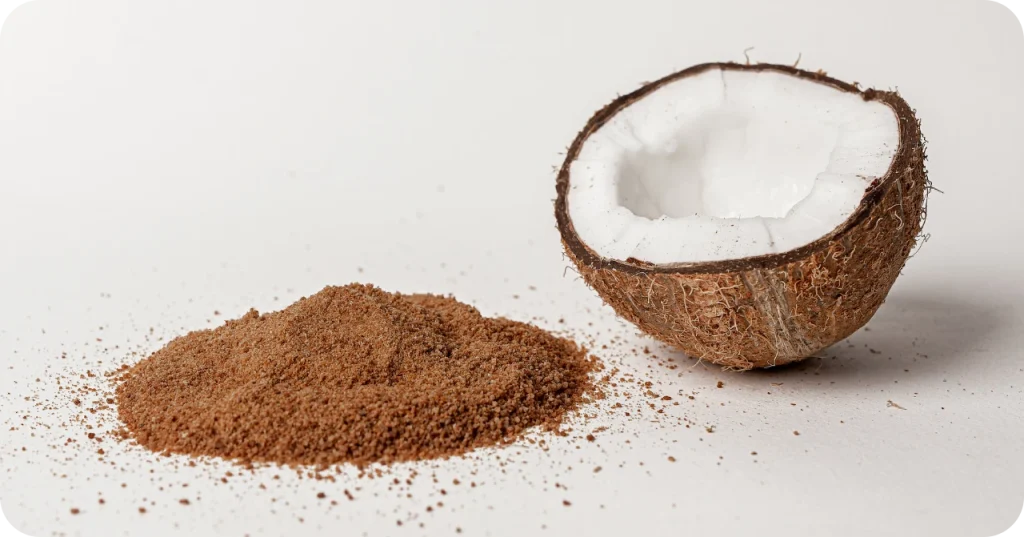
Global markets show steady demand for organic coconut sugar across food sectors. Buyers select it to support plant-based positioning and transparent ingredient lists. Therefore, manufacturers, distributors, and ingredient traders include it in diverse formulations.
Food producers actively use this sweetener in several processed foods. Beverage brands blend it into coffee mixes, cocoa drinks, and powdered beverages. Meanwhile, bakery manufacturers add it to cookies, cakes, and toppings. Confectionery producers also mix it into fillings and sweet blends.
In addition, many brands position it within health-focused or natural product lines. Its mild caramel-like profile adds flavour depth without complex reformulation. As a result, developers apply it where colour and taste support recipe balance. These functional traits influence repeat industrial demand.
Furthermore, distributors channel products to supermarkets and specialty retailers. Ingredient traders manage bulk supply for regional food manufacturers. Demand remains visible in North America, Europe, and several Asian markets. Buyers therefore prioritise stable supply, consistent quality, and export readiness.
Importers usually plan monthly volume schedules to support production cycles. They review supplier capacity, lead time, and documentation before confirming orders. Reliable exporters help buyers maintain continuity in their supply chains. Consequently, growing demand encourages structured, long-term sourcing partnerships.
Typical Industrial Applications
- Bakery products such as cookies, cakes, and toppings
- Beverage powders including coffee and cocoa mixes
- Confectionery fillings and blended sweet bases
- Retail-packed natural sweetener products
Supply Chain Considerations for Buyers
- Bulk sourcing for food manufacturing use
- Stable granulation and moisture control
- Consistent colour and flavour profile
- Export documentation and logistics readiness
Product Specifications Required by Importers
Importers define clear specifications to control organic coconut sugar performance. These parameters guide sourcing, quality checks, and supplier evaluation. Therefore, buyers, manufacturers, and ingredient traders rely on measurable data before confirming bulk orders.
Moisture level directly affects storage stability and handling behaviour. Lower moisture helps the sugar flow freely and reduces clumping during shipment. In addition, consistent colour supports uniform product appearance in finished foods. Taste should remain mild with a caramel-like note to support formulation stability.
Granulation size also influences mixing and dissolution speed in production. Fine grades dissolve faster, while standard grades support multi-purpose applications. Consequently, buyers match granulation type with their processing requirements. Cleanliness control further ensures suitability for food manufacturing use.
Buyers always request detailed product specification sheets from suppliers. They review moisture range, granulation grade, and foreign matter control. Moreover, many importers require laboratory analysis reports for verification. These documents support quality assurance and regulatory compliance.
Packaging details form an essential part of the overall specification. Bulk export commonly uses inner plastic liners with outer cartons or sacks. This structure protects the product from humidity during sea transport. Accurate labelling also supports traceability and warehouse management.
Common Quality Indicators Checked by Importers
- Moisture level for flowability and shelf stability
- Colour range for visual consistency
- Granulation size based on processing needs
- Taste profile stability between batches
- Cleanliness and foreign matter control
Specification Documents Typically Requested
- Product specification sheet
- Laboratory analysis or Certificate of Analysis
- Packaging description and net weight details
- Batch coding and traceability information
Sourcing Organic Coconut Sugar from Indonesian Exporters
Importers source organic coconut sugar through structured supplier evaluation and clear specifications. This approach reduces sourcing risk and supports consistent product performance. Therefore, buyers, manufacturers, and ingredient traders use step-by-step assessment before confirming supply.
First, buyers define application needs, quality parameters, and monthly volume targets. Clear requirements help exporters respond with accurate specifications and production capacity details. Next, buyers request samples to check colour, taste, and granulation behaviour. Sample testing, both internal and laboratory-based, confirms suitability for food processing.
After sample approval, buyers review supplier capacity, lead time, and export readiness. They also assess production control, traceability, and packaging methods. Moreover, exporters coordinate raw material sourcing and processing schedules to maintain stable supply. Structured evaluation helps importers build reliable long-term sourcing plans.
Documentation plays a key role in international sourcing activities. Importers examine specification sheets, Certificates of Analysis, and shipment documents. Accurate paperwork supports customs clearance and regulatory compliance. Consistent communication between buyer and exporter also improves logistics coordination.
Key Factors Buyers Review During Sourcing
- Product specifications and laboratory data
- Sample performance in application testing
- Production capacity and lead time
- Packaging structure for bulk export
- Traceability and documentation readiness
Organic coconut sugar from Indonesia supports global food industries as a plant-based sweetener with steady demand. Buyers evaluate it through product profile, processing control, and measurable quality indicators. As a result, structured sourcing and organized exporters help maintain stable supply chains.
Consistent specifications, proper packaging, and complete documentation strengthen supply reliability. Exporters who focus on these areas support smooth trade and predictable product performance. Such practices help buyers manage procurement risk and maintain market standards.
Conclusion and Next Steps
In conclusion, importers who apply structured sourcing can secure stable organic coconut sugar supply. Clear specifications, sample testing, and documentation checks reduce uncertainty. Long-term cooperation with organized exporters further improves planning and supply continuity.
For companies seeking a reliable Indonesian exporter, further discussion can help align volume plans and shipment schedules. Realsa Natural supports buyers with controlled production, export preparation, and consistent specifications. You may contact the team through Instagram, LinkedIn, and WhatsApp to discuss sourcing needs or place orders for Organic Coconut Sugar.
 Realsa Natural – Export Sales