
Bulk Organic Coconut Sugar for Food Industry: Export Guide from Indonesia
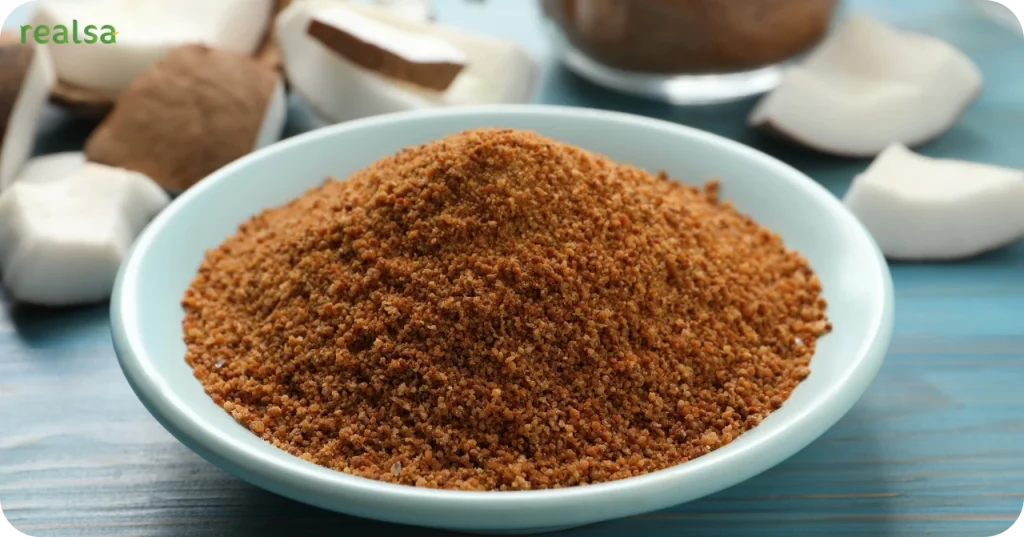
Bulk organic coconut sugar is a plant-based sweetener made from coconut blossom sap. Therefore, food manufacturers and ingredient buyers use it in large-scale production. In addition, Indonesian exporters supply this ingredient to support industrial food applications.
Organic coconut sugar plays a defined role in modern food manufacturing. Moreover, producers use it as a granulated sweetening ingredient in processed foods. Its brown colour and mild caramel taste help create balanced flavour profiles. As a result, many industrial buyers treat it as a specialty sugar rather than a direct substitute for refined sugar.
Food industries prefer bulk formats because they support continuous production lines. Furthermore, bulk supply reduces packaging waste and simplifies storage management. Manufacturers also gain better cost control through large-volume sourcing. Consequently, understanding industrial performance helps buyers select the right grade and exporter.
Industrial Uses of Organic Coconut Sugar
Food industries use organic coconut sugar in several production sectors. For example, bakery manufacturers add it to cookies, cakes, and pastries. It provides sweetness while supporting brown colour during baking. In addition, its caramel-like taste adds depth without dominating other flavours.
Beverage industries also apply it in powdered drink formulations. For instance, coffee blends, cocoa drinks, and instant powders often include it. Fine granulation supports fast dissolution in hot or cold liquids. Therefore, manufacturers improve mixing efficiency in production lines.
Confectionery producers use it in fillings and sweet coatings. Moreover, snack producers include it in cereal bars and coated nuts. Sauce and syrup manufacturers also use it as a sweetening base. As demand grows, Indonesian exporters supply bulk volumes for these applications.
Common industrial applications:
- Bakery products
- Powdered beverages
- Confectionery fillings
- Snack coatings
- Sauces and syrups
Bulk Specifications for Food Manufacturers
Food manufacturers select bulk organic coconut sugar based on measurable specifications. First, moisture level remains a key factor. Controlled moisture prevents clumping during storage and transport. Therefore, buyers confirm this data in specification sheets.
Granulation size also affects production efficiency. Fine granules dissolve faster in beverages, while standard granules support multi-purpose use. Consistent granulation ensures even mixing in large batches. As a result, factories maintain stable production flow.
Colour consistency influences final product appearance. Meanwhile, taste must remain mild with caramel notes. Buyers also check cleanliness and foreign particle control. Consequently, laboratory analysis helps reduce production risk.
Key quality indicators:
- Moisture content
- Granulation size
- Colour range
- Taste profile
- Cleanliness control
Compliance with International Food Regulations

Food manufacturers must meet food regulations in destination markets. Therefore, importers review compliance before placing orders. Proper compliance supports smooth customs clearance.
Exporters usually provide specification sheets and laboratory reports. In addition, these documents describe moisture level, granulation, and safety parameters. Some markets also require additional food safety documentation. Consequently, accurate paperwork reduces import delays.
Labelling compliance also plays a role. Importers must follow local standards when repacking. Clear ingredient naming supports regulatory alignment. Hence, buyers prefer Indonesian exporters who understand export documentation.
Export Packaging and Logistics Options
Bulk export packaging protects the sugar during transport. Because the sugar reacts to humidity, moisture protection is essential. Therefore, packaging must keep the product dry and free flowing.
Producers typically use inner plastic liners with outer cartons or sacks. The inner layer blocks moisture, while the outer layer supports handling. This structure protects product quality during sea freight. In addition, strong packaging supports palletization and container loading.
Logistics planning also influences product condition. Buyers confirm the port of loading and transit time. Proper container arrangement reduces movement during shipping. As a result, stable packing maintains product integrity.
Working with Indonesian Organic Coconut Sugar Exporters
Importers benefit from structured cooperation with Indonesian exporters. First, buyers define application, volume, and specification targets. Clear requirements help exporters provide accurate offers.
Next, buyers evaluate samples to verify colour, taste, and granulation. Laboratory checks then confirm technical parameters. When results match, buyers gain confidence in supply stability.
Buyers also review production capacity and lead time. Furthermore, clear export documentation supports smooth customs procedures. Regular communication strengthens long-term cooperation.
Conclusion: Bulk Industrial Sourcing and Supply Stability
Bulk organic coconut sugar supports many industrial food applications. Therefore, buyers evaluate it through industrial suitability, specifications, compliance, and packaging standards. A structured sourcing approach helps manufacturers maintain stable production and supply reliability.
Food manufacturers and ingredient buyers may review technical data and packaging options by connecting with experienced Indonesian exporters. In addition, structured communication supports efficient sourcing decisions. Realsa Natural provides organic coconut sugar with controlled specifications, protective packaging, and export documentation to support global buyers. For further information or sourcing discussions, buyers can connect through Instagram, LinkedIn, and WhatsApp.
 Realsa Natural – Export Sales